

Categories
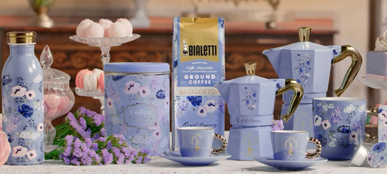
BIALETTI BRIDGERTON COLLECTION
DeCarlo Tarallini biscuit with olive oil, 250g
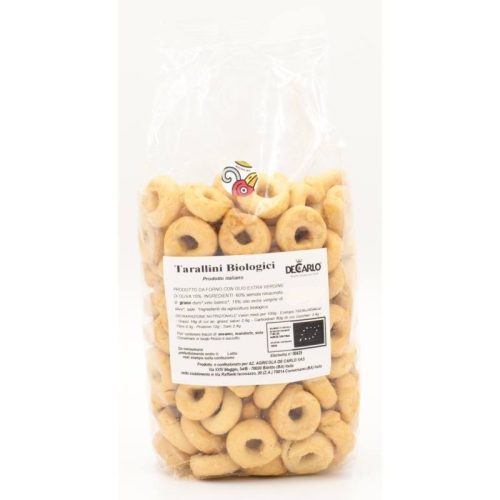
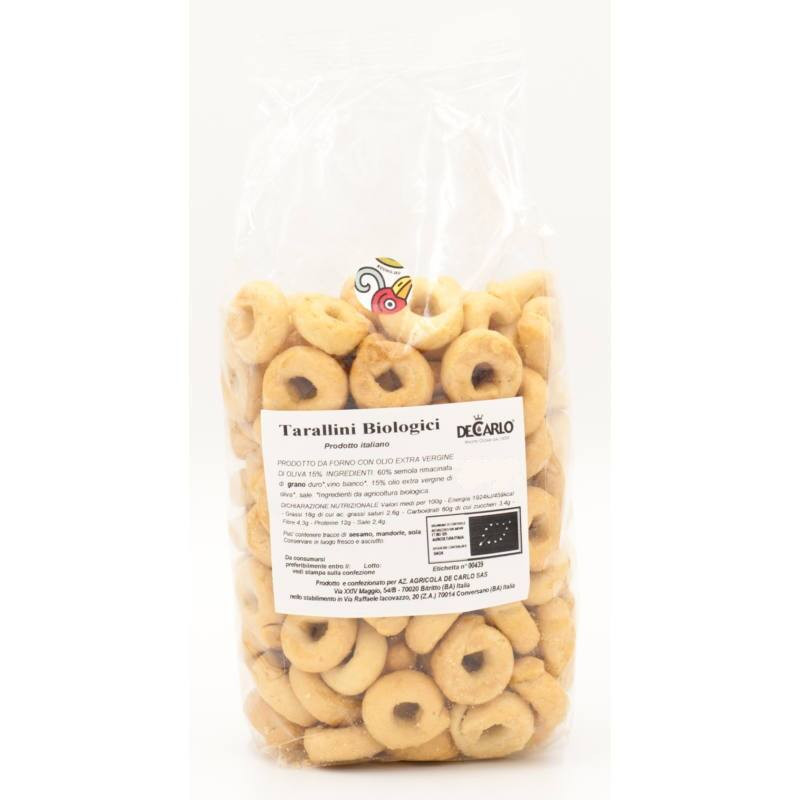
DeCarlo's scented, crunchy tarallini biscuits (small taralli) are made from organic durum wheat and usually eaten as an accompaniment to aperitifs.
Its raw materials come from the area around the ancient Alta Muglia Park, Puglia. The extra virgin olive oil used in the tarallini is pressed from coratina olives in the historic DeCarlo oil mill.
Tarallins are made only using durum wheat, white wine, olive oil and salt. DeCarlo does not use palm oil or yeast, wine contains no sulphites.
This light Italian snack is a perfect choice for artichokes, olives and tomatoes.
2 400 Ft
Unit price: 9 600 Ft/kg
Out of stock
Details
The story of taralli goes back centuries and is deeply rooted in the culinary traditions of Southern Italy, especially the region of Puglia. According to legend, taralli were born in the 15th century during a severe famine, when an Apulian mother combined flour, olive oil, white wine and water to create a simple dough to feed her children. She shaped the dough into rustic rings and baked them in the oven, creating what would become one of Puglia’s most iconic specialities.
Some historians believe taralli may be even older. Archaeological evidence suggests that the ancient Greeks living in Southern Italy offered similar ring-shaped breads to the goddesses Demeter and Persephone. While the recipe has evolved over the centuries, the distinctive shape of taralli has remained remarkably unchanged.
The recipe improved over time as home bakers discovered that briefly boiling the dough before baking made taralli even crispier. This process, still used today, gave taralli their unmistakable crunch. Traditional flavourings such as fennel seeds were later added, creating the aromatic and savoury snack loved across Italy.
Each area of Puglia developed its own version of taralli—round or figure-eight shaped, plain or seasoned—but all share the same homemade character and authentic taste. Originally considered humble food, taralli became a staple for pilgrims and travellers because they were durable, filling, and easy to carry on long journeys.
Over time, this simple peasant snack became one of Italy’s most beloved bakery products, appreciated not only for its irresistible crunch but also for its rich cultural heritage. Today, taralli are enjoyed around the world as a symbol of authentic Italian tradition.
More than just a savoury snack, taralli are a bite-sized piece of Puglia’s history—bringing together tradition, craftsmanship, and the warm flavours of Southern Italy in every crunchy ring.
Data
Manufacturer:
DeCarlo
Package:
250g
Country of origin:
Italy
Place of origin:
Puglia
Bundle offers
Reviews
Be the first to write a review!
Similar products